
The Bridgnorth man that helped Oppenheimer create the world's first A-bomb
As Oppenheimer takes 13 nominations in this year's Oscars, a local historian said a little known Shropshire scientist was instrumental in the creation of the world's first atomic bomb that inspired the film.
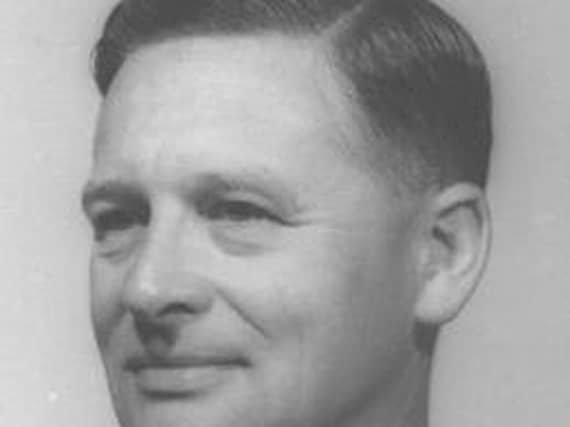


Christopher Nolan's biopic of the head of the Manhattan Project took 13 Oscar nominations on Tuesday, and looks set to sweep the floor at this year's Academy Awards.
However, Bridgnorth historian Clive Gwilt, said a Bridgnorth scientist and academic was instrumental to the success of the Manhattan Project.
Mr Gwilt, who has authored numerous books centred on the market town's history, said Dr Ernest Titterton was a senior science and music master at Bridgnorth Grammar School.
He said: "Shortly after the outbreak of war in September 1939 he was recalled to resume scientific works in connection with the European War which he was actively engaged until November 1943."
In 1943, Titterton joined the Manhattan Project's Los Alamos Laboratory, where he helped develop the first atomic bombs. He eventually became one of the laboratory's group leaders.
"He was chosen to proceed to the USA by Sir James Chadwick to assist with the production of the atom bomb and hydrogen bombs," said Mr Gwilt.
Titterton's role in the Manhattan Project was instrumental in creating timing circuits used to track the progress of an implosion.
When Robert Oppenheimer, reorganised the Los Alamos Laboratory to focus on implosion, Titterton became a senior member and was at the Trinity nuclear test that fired the first atomic weapon at Alamogordo, New Mexico.
Titterton wrote about his experience of witnessing the first A bomb test following the war and said: "I was in the main control dug-out, 10,000 yards from the bomb and it was the most fantastic and frightening thing I have ever seen.
"Indeed, if the nations cannot hence-forth live in peace then there is little doubt that the end of the world is in sight.'”
Returning to England, Titterton joined the Atomic Energy Research Establishment in Harwell, Oxfordshire.
The father of three was seriously hurt in a car accident in September 1987, and died three years later aged 73.
Comment Guidelines
Iconic Media encourages reader discussion on our stories. User feedback, insights and back-and-forth exchanges add a rich layer of context to reporting. Please review our Community Guidelines before commenting.