
60 homes approved for outskirts of Shropshire town
Shropshire Council’s inability to meet government housing targets has been a significant factor in the decision
Planners have approved 60 homes for a country field on the outskirts of a Shropshire town.
AFM Farming LLP’s plans for the site off Soulton Road in Wem have been given the go-ahead by Shropshire Council.
The firm has seen previous proposals for homes on the site refused, with a 2015 plan rejected by the council, and then refused at a planning appeal.
The latest application is for up to 60 homes on the 8.2 acre site, which is currently an agricultural field sitting opposite existing housing at Round Meadow.
The vehicle access to the proposed development is planned to be from Church Lane via a new priority junction, rather than directly from Soulton Road.
The site is outside Wem’s designated development boundary.
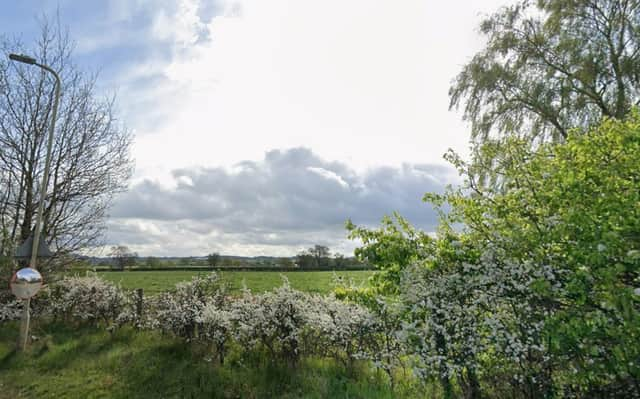

The approval of the latest plan comes despite 24 objections from local residents, along with Wem Town Council, and local Shropshire Councillor Gary Groves.
The concerns included the inadequate infrastructure, highways safety concerns, flood risk, and loss of agricultural land.
The planning department report on the decision explained the town council’s concerns about the impact on local roads - particularly the nearby level crossing.
It stated that the town council has “concerns about traffic congestion, standing traffic, and road safety, especially at the level crossing and surrounding roads”.
It added that the council “urges Shropshire Council to facilitate round-table discussions with all applicants for housing developments east of the town to address shared infrastructure concerns”.
The town council has also suggested “the need for a link road connecting this side of town with the Shawbury Road to relieve pressure on the road network and support sustainable development”.
Councillor Groves said that back in 2016 the planning inspector who rejected the appeal said that “even 50 houses would constitute an unjustified loss of agricultural land and open countryside”.
But, in detailing the reasons for approving the proposal, Shropshire Council’s planning department said the council’s lack of a five-year-land supply meant the application should be approved - with the benefits outweighing the drawbacks.
Traffic and farming land
Shropshire Council’s planning department also said it does not expect the development to have a significant impact on traffic.
It said: “The local highway network, including Church Lane and the B5065, has sufficient capacity to accommodate the additional movements without resulting in severe residual impacts on highway safety or operation.
“While it is acknowledged that the railway level crossing to the west of the site can experience periodic queuing, this is an existing constraint affecting the wider road network, and the submitted assessment concludes that the development would only contribute a limited number of additional vehicles during peak periods, insufficient to materially worsen conditions.”
Addressing the loss of a farming field it added: “The proposal would result in the loss of agricultural land and this is acknowledged as an adverse impact of the development; however, this harm is limited and is not considered to be of significant weight.”
The report said the need to meet its government five-year land supply targets mean that the proposal could not be refused - a factor which has been repeated on numerous Shropshire applications in recent months.
It stated: “The proposal has been assessed against the adopted development plan and relevant national planning policy.
“Whilst the site lies outside the defined development boundary and therefore conflicts with adopted spatial strategy, significant weight must be afforded to the need to boost the supply of housing where the council cannot demonstrate a five-year housing land supply, engaging the tilted balance.
“In applying this balance, the proposal would deliver a meaningful contribution to housing delivery, alongside associated economic benefits during construction and an increased local population to support existing services and facilities within Wem.
“On balance, the adverse impacts of the development, including the loss of agricultural land and departure from the settlement boundary and resultant encroachment into the undeveloped countryside, would not significantly or demonstrably outweigh the benefits when assessed against the policies of the National Planning Policy Framework taken as a whole.
“The proposal is therefore considered acceptable in planning terms and permission is recommended accordingly.”
Comment Guidelines
Iconic Media encourages reader discussion on our stories. User feedback, insights and back-and-forth exchanges add a rich layer of context to reporting. Please review our Community Guidelines before commenting.