
First Drive: BYD targets supermini class with plug-in hybrid Dolphin G DM-i
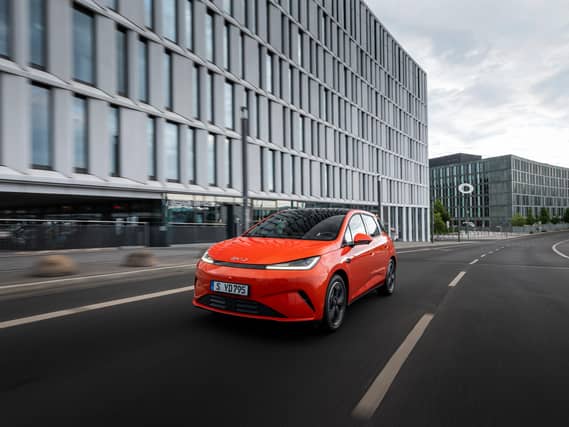

The supermini class hasn’t had a plug-in hybrid model…. Until now. Meet the BYD Dolphin G DM-i, and James Batchelor has driven it.
What is it?
But, as we’ve come to expect from the Chinese newcomer brands, BYD has spotted a potential gap in the market. Meet the BYD Dolphin G DM-i – the only supermini offered in the UK that’s a plug-in hybrid.
What’s new?
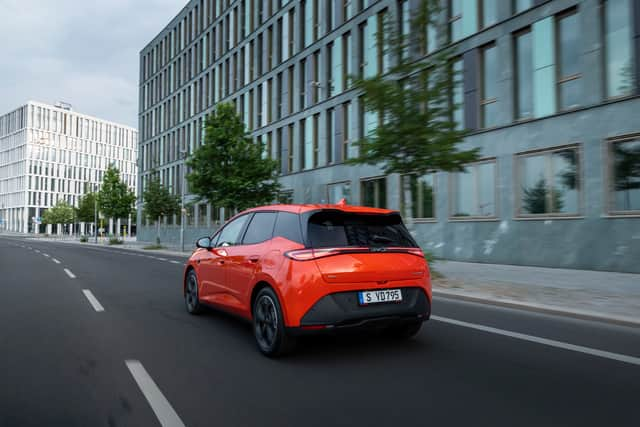
The Dolphin G DM-i sits alongside the Dolphin in the model range, rather than replacing it.
What’s under the bonnet?
This motor gets its power from either a 7.4kWh battery pack for the entry-level Active model, or an 18.3kWh pack for the other models in the range.
BYD claims a pure-electric range of 25 miles for the smaller battery and 65 for the larger one, with a combined petrol-electric range of a whopping 646 miles (634 for the smaller battery).
As for charging, there’s a maximum AC rate of 3.3kW for the small pack and 6.6kW for the large battery, but it’s only the big pack that has a maximum DC charging rate (39kW). Vehicle-to-load (V2L), which allows you to charge up other electrical devices using the car’s battery, is also available.
What’s it like to drive?
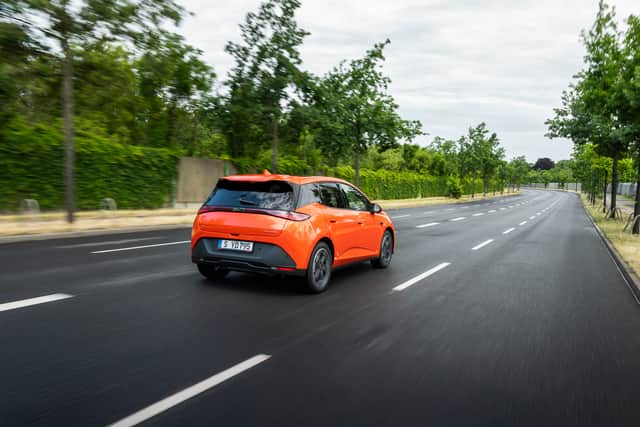
The 161bhp motor allows the car to zip away from the lights with ease, and the light steering helps in urban areas.
It’s economical – on our test route we achieved nearly 50mpg – but fun it isn’t. That light steering doesn’t give much connection to the road, and while the ride is mostly comfortable, the car can bounce around a bit too much. Overly intrusive driving aids dampen the fun too, so a Renault Clio and Toyota Yaris remain the better choices if you value some engagement when driving a supermini.
How does it look?
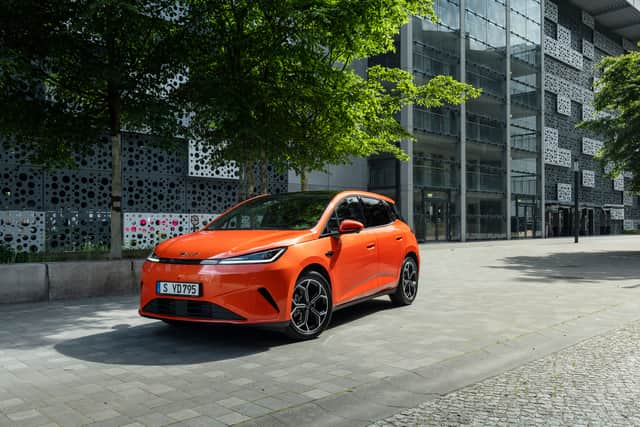
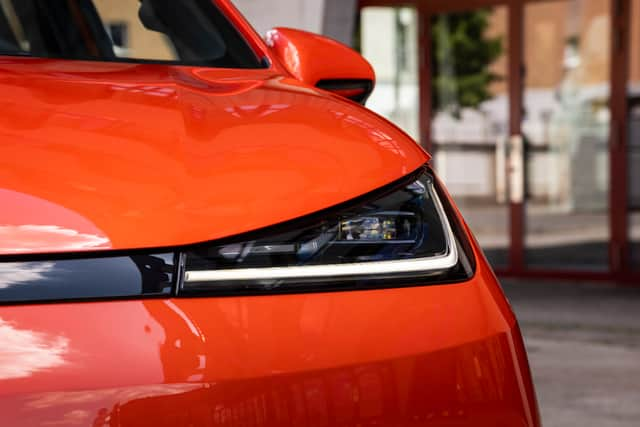
Actually, you’ll have to go out of your way to turn the paint colour down as the standard shade is the ‘Orange Sunset’ pearlescent in our pictures. There’s nothing remotely wrong with the way the G looks, it just boggles my mind that it has no styling similarities whatsoever with the two other Dolphin models in the range.
What’s it like inside?
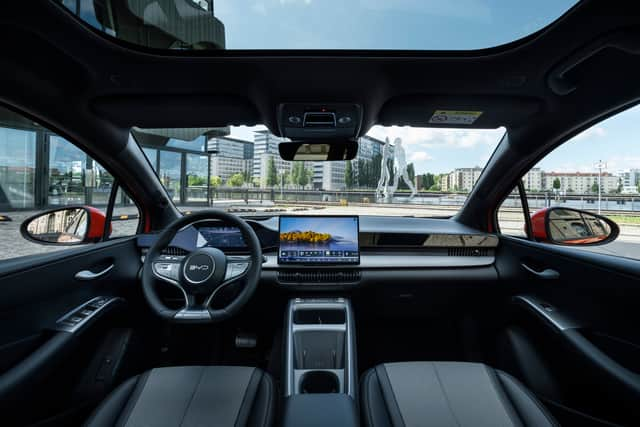
Apart from a few physical buttons on the centre console and, thankfully, the steering wheel, virtually everything is controlled through the touchscreen – 10.1 inches for the entry-level car and 12.8 inches on all others – which works well enough, with sharp graphics, even if turning off the annoying ADAS features requires a few more prods of the screen than should be necessary.
The rear seats are surprisingly a little cramped; even me, at 5ft 11 (1.8m), struggled to get comfortable, with headroom being particularly disappointing. The boot is excellent though – 425 litres, rising to 1,225 litres with the seats down. There’s even some underfloor storage for charging cables, but 60:40 split-folding rear seats don’t come on the entry-level car.
What’s the spec like?
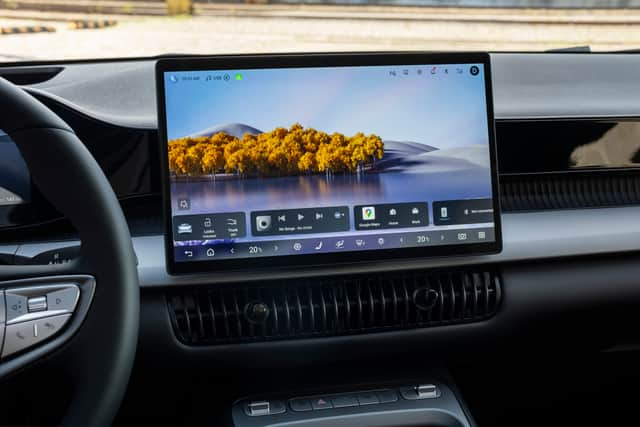
Boost trim adds the larger battery and 12.8-inch touchscreen, vegan leather seats, heated front seats, split-folding rear seats, wireless phone charging and V2L. Comfort gets a head-up display, 18-inch wheels, Google functionality and a panoramic roof with electric sunblind, while sitting at the top of the range is the Sport. It’s pretty conservative, though, and gets black alloy wheels, artificial suede upholstery, and the choice of blue or orange highlights in the interior.
BYD hasn’t confirmed prices yet, but has hinted the Active should kick off between £23,000 and £25,000.
Verdict
The Dolphin G DM-i is another well-thought-out and conceived car, just as we’ve come to expect from BYD.
It could offer some pretty low running costs for some buyers, but ultimately, its success hinges on whether small car buyers really do want plug-in hybrid power or are happy with the status quo of petrols, full-hybrids and EVs.