£9 million fund to target dark web is welcomed by tragic Shropshire student's mother
The Home Secretary has pledged to crack down on criminals who use the "dark web" to trade in guns, drugs and child abuse images.
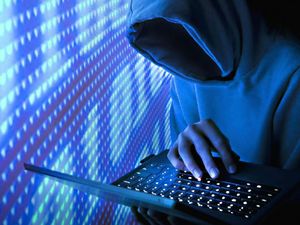
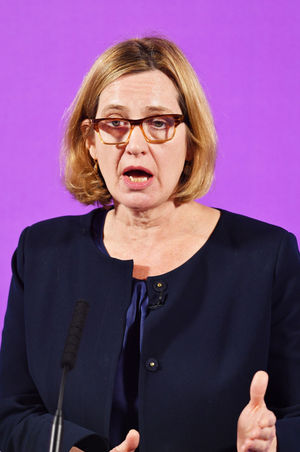
Amber Rudd announced an extra £9 million was being made to tackle criminals who use secret websites to carry out their illicit trade.
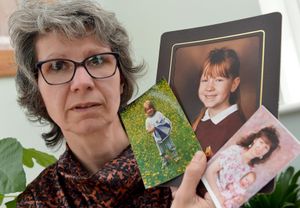
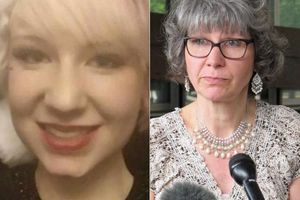
The news has been welcomed by Fiona Parry, the mother of a Shrewsbury student whose daughter died after buying deadly diet pills over the internet.
Miss Rudd is concerned about a hidden layer of the internet which uses encrypted services. This enables both website operators and their users to hide their activities from the authorities.
This anonymity has attracted criminals seeking to avoid detection by law enforcement agencies.
Speaking at the Cyber UK security conference in Manchester, Miss Rudd described the dark web as a "dark and dangerous place where anonymity emboldens people to break the law in the most horrifying of ways" and a "platform of dangerous crimes and horrific abuse".
She spoke of a sickening shopping list of services and products being on offer.
Fiona Parry, whose 21-year-old daughter Eloise died from an overdose of illegal slimming pills she had bought over the internet, had previously called for tougher action to combat the dark web.
She said Miss Rudd's announcement was excellent news.
"I'm really pleased she's doing that," said Miss Parry.
"It's definitely something that more funds need to found for.
"It's a law unto itself, and anything that happens to combat it is good."
Miss Rudd said the extra money would be used for "specialist law enforcement", but declined to elaborate for operational reasons.
"They will use this money to help combat the criminals who continually exploit the anonymity of the dark web," she said.
The Home Secretary also said that an further £5 million had been earmarked for cyber crime units in regional police forces, so cyber crime could be pursued locally.
According to the Home Office, only 30 per cent of police forces currently have a cyber capability that reaches the minimum standard.
The funding is part of £50 million allocated to deal with the growing problem of online crime.
"Whilst criminals plot and hide behind their screens, their actions have real-life consequences for their victims.
"My own father was the victim of fraud and I know from personal experience the importance of supporting those who have been victimised through no fault of their own.
"Now that it's happening online, it's happening to even more people."
She also said that business owners, cyber security experts and individuals have a role to play.
"In the same way that shops protect themselves from burglary with locks, alarms and security guards, I expect businesses to take equivalent precautions digitally," said Miss Rudd.
"The world of cyber is fast-developing and we need a fast-developing response to match. One that recognises that it is the responsibility of everyone in the UK to fight the evolving threat."
The internet’s darker side

The dark web is the world wide web content that exists on darknets, overlay networks that use the internet but require specific software, configurations or authorization to access.
The dark web forms a small part of the deep web, the part of the web not indexed by web search engines, although sometimes the term deep web is mistakenly used to refer specifically to the dark web.
The darknets which constitute the dark web include small, friend-to-friend peer-to-peer networks, as well as large, popular networks like Tor, Freenet, and I2P, operated by public organisations and individuals.
Users of the dark web refer to the regular web as Clearnet due to its unencrypted nature.
It has been used for illegal activity such as illegal trade, forums, and media exchange.
Although some of the dark web is believed to be innocuous, some prosecutors and government agencies, among others, are concerned that it is a haven for criminal activity.